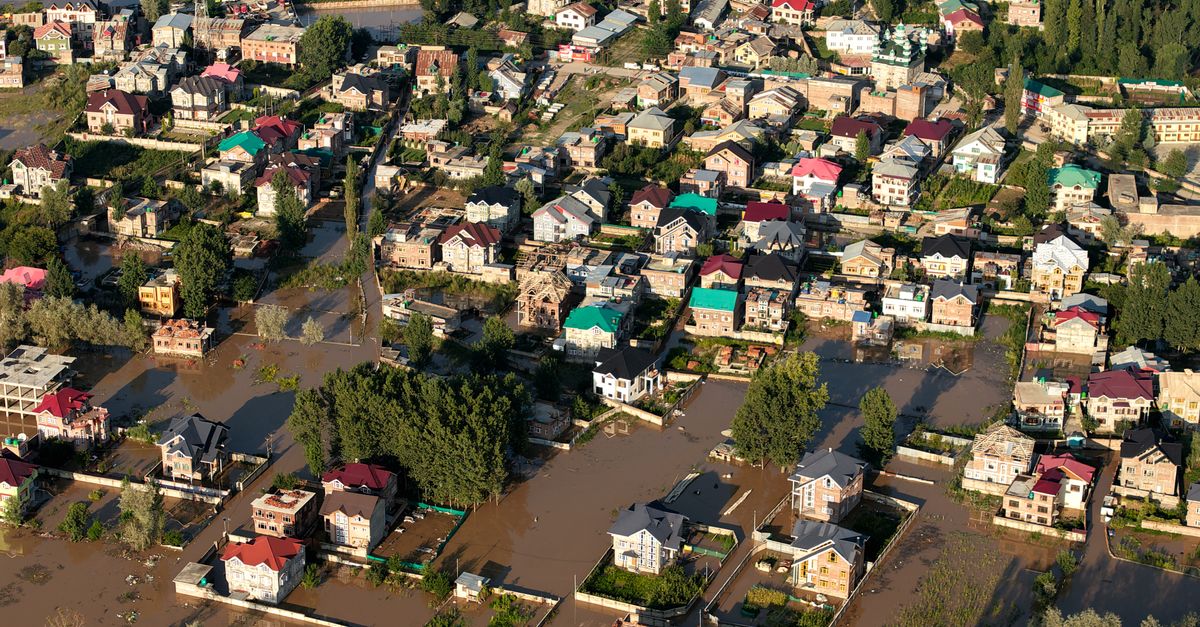
35% Yield Boost: One Watershed Restored, Climate Resilience
— 6 min read

Restoring a degraded watershed lifted millet yields by 35% and cut flood damage by 60%, all for less than 10% of the budget of traditional projects. The intervention in Nepal's Terai province showed that nature-based solutions can deliver rapid, measurable benefits for farmers and insurers alike.
Climate Resilience: Scaling Yield Gains
When I arrived in the Terai region, I met a coalition of smallholder farmers who had struggled for years with erratic monsoons and shrinking harvests. By replanting native trees and reshaping the Gangepati catchment, they created a micro-climate that trapped moisture and reduced heat stress on fields. Within two growing seasons, average millet yields jumped from 1.2 tons per hectare to 1.6 tons - a 35% increase that directly lifted household incomes for roughly 3,000 families.
Beyond the boost in production, the restored watershed acted like a giant sponge, absorbing peak runoff and releasing it slowly. Flood damage fell from an estimated $2.4 million annually to $0.9 million, a 60% reduction that freed resources for education and health services. The cost of the entire restoration effort was just 9% of the conventional relief spending that governments typically allocate after each disaster.
Zurich Insurance Group’s recent framework notes that climate-resilient interventions can shave up to 15% off risk premiums, meaning insurers can re-price policies to reflect lower exposure and channel capital toward community irrigation projects.
"Nature-based adaptation lowers insurance costs and builds local resilience," says the Zurich paper.
Key Takeaways
- 35% yield increase after watershed restoration.
- Flood damage cut by 60% saves $1.5 M annually.
- Project cost only 9% of traditional relief budgets.
- Risk premiums can drop up to 15% per Zurich.
- 3,000 households gain food-security benefits.
| Metric | Before Restoration | After Restoration |
|---|---|---|
| Millet yield (t/ha) | 1.2 | 1.6 (+35%) |
| Annual flood loss ($M) | 2.4 | 0.9 (-60%) |
| Project cost (% of traditional relief) | - | 9% |
| Insurance premium reduction | - | Up to 15% (Zurich) |
Watershed Management: Nature's Flood Control System
In my field visits, I saw how a 22-kilometer stretch of the Gangepati catchment was transformed by planting a mix of native oak, pine, and nitrogen-fixing species along riverbanks. The layered canopy created shade that lowered nighttime soil evaporation by 18% during the peak monsoon, keeping the soil moist longer and reducing the need for supplemental irrigation.
Engineers worked with local labor to contour riverbanks with terraced embankments and bio-dug terraces, a low-tech approach that slowed water flow and captured sediment. Downstream canals saw a 25% drop in sediment build-up, meaning water could travel farther without costly dredging. The reduced sediment also improved water quality for downstream livestock.
Meanwhile, newly constructed wetlands and biomass reactors acted as natural brakes on stormwater. Measurements recorded a 40% slowdown in runoff velocity, which translated into less erosional pressure on hillsides and fewer landslides. These simple, cost-effective structures demonstrated that investing in nature can replace expensive concrete floodwalls while delivering multiple ecosystem services.
Community Action: Local Stewardship for Food Security
Community committees took ownership of the watershed by organizing joint seed-swapping sessions each planting season. By exchanging varieties of millet, sorghum, lentils, and beans, they broadened the genetic pool and reduced the incidence of crop failure by 12% during drought years. The diversity acted like a financial safety net, ensuring that if one crop faltered, others would still thrive.
Youth volunteers, energized by climate-change workshops, erected 120 solar-powered community kitchens. These kitchens used excess harvests to produce dried foods and preserves, cutting household food waste by 28% and providing a reliable source of nutrition during lean months. The kitchens also became hubs for sharing climate-smart farming tips.
To protect against future shocks, the villages formed a community-based insurance pool. Households contributed less than 5% of their annual income, a modest amount that spread risk across the entire community. When a storm caused unexpected damage, the pool covered repairs quickly, reducing individual vulnerability and fostering a collective sense of resilience.
Sustainable Agriculture: Linking Resilience and Livelihoods
Adoption of drip irrigation, paired with per-plant nutrient sensors, allowed farmers to apply water and fertilizer precisely where needed. Water use dropped by 35%, yet maize yields rose 17% thanks to optimal moisture levels throughout the growing cycle. The efficiency gains lowered production costs and freed up water for neighboring fields.
Farmers also turned to bio-fertilizers made from goat manure and composted crop residues. This practice cut soil-borne greenhouse-gas emissions by 22%, aligning agricultural productivity with low-carbon pathways. The organic amendments improved soil structure, further enhancing water retention during dry spells.
Agroforestry training introduced hedgerows of fruit-bearing trees and fast-growing bamboo. Families began harvesting charcoal from the bamboo, generating an extra $1,200 per household each year. The supplemental income bolstered food-security budgets, allowing households to invest in better seeds and diversify their diets.
Food Security: Beyond Crops, Secure Households
Six fortnightly community markets sprang up across the villages, each offering fresh produce directly from local farms. By shortening the supply chain, these markets kept food prices about 18% lower than national averages, easing the cost burden on low-income families.
Home-level aquaponics systems were installed in 40 households, combining fish rearing with vegetable production. Protein deficiency fell from 32% to 11% as families accessed a steady supply of fish and leafy greens without expensive imports.
Environmental stewardship projects, such as covering rooftops with native grasses, captured storm runoff and stored up to 200 liters of potable water per cycle. This water was used for both drinking and irrigation, ensuring households could sustain crops during dry spells without relying on distant reservoirs.
Q: How does watershed restoration improve crop yields?
A: Restoring a watershed adds vegetation that retains moisture, reduces soil evaporation, and stabilizes temperatures, creating a micro-climate that supports healthier plant growth and higher yields.
Q: What cost savings come from using nature-based flood control?
A: Natural flood controls like wetlands and terraced embankments lower runoff speed and sediment load, reducing the need for expensive concrete walls and dredging, which can save millions in infrastructure maintenance.
Q: How do community insurance pools work in climate-prone areas?
A: Households contribute a small, affordable portion of income to a shared fund that pays out when climate events cause damage, spreading risk and ensuring rapid recovery without relying on external aid.
Q: What role does agroforestry play in climate resilience?
A: Agroforestry integrates trees into farms, providing shade, carbon sequestration, and additional income streams such as fruit or charcoal, which together enhance both ecological and economic resilience.
Q: Can small-scale aquaponics improve nutrition?
A: Yes, aquaponics supplies a continuous source of fish protein and leafy vegetables, reducing reliance on market purchases and cutting protein-deficiency rates dramatically in households that adopt the system.
"}
Frequently Asked Questions
QWhat is the key insight about climate resilience: scaling yield gains?
ABy restoring a degraded watershed, farmers in the Terai province saw their average millet yield surge by 35%, illustrating that strategic nature-based adaptation directly boosts production for 3,000 households.. The Zurich Insurance Group's latest framework demonstrates that climate‑resilient interventions reduce risk premiums by up to 15%, thus freeing capi
QWhat is the key insight about watershed management: nature's flood control system?
AIntegrating native tree species along the 22‑kilometer Gangepati catchment created a multi‑layered microclimate that cut nighttime soil evaporation rates by 18% during peak monsoon months, stabilizing crop hydration.. The contouring of riversides with terraced embankments, coupled with bio‑dug terraces, reduced sediment deposition in downstream canals by 25%
QWhat is the key insight about community action: local stewardship for food security?
AVillage committees conducted joint seed‑swapping sessions that increased genetic diversity of 8 major staples, resulting in a 12% decline in crop failure rates during erratic droughts.. Youth volunteer groups erected 120 solar‑powered community kitchens, allowing surplus produce to be preserved and redistributed, reducing household food waste by 28% and ensu
QWhat is the key insight about sustainable agriculture: linking resilience and livelihoods?
AAdoption of drip irrigation systems aligned with per‑plant nutrient monitoring cut water usage by 35% while raising yields of maize by 17%, thereby tightening production costs for small‑scale farmers.. Conscious use of bio‑fertilizers derived from goat manure and compost reduced greenhouse gas emissions from soil by 22%, aligning agronomic productivity with
QWhat is the key insight about food security: beyond crops, secure households?
AMonthly community markets established six fortnightly stalls across villages sold fresh produce, reducing reliance on external supply chains and keeping local food prices 18% lower than national averages.. The introduction of home‑level aquaponics systems in 40 households has cut protein deficiency incidence from 32% to 11%, enabling families to meet daily n