7 Workshops Boosting Climate Resilience in Syria
— 5 min read

Locally-led workshops are turning GIS data, irrigation science, and policy tools into concrete actions that cut water loss, improve yields, and embed climate-resilience skills in Syrian farming communities. In 2018, Syrian farmers lost up to 80% of irrigated water during a severe drought, prompting a wave of community-based training.
Local Workshop Sparks Community Water-Risk Mapping
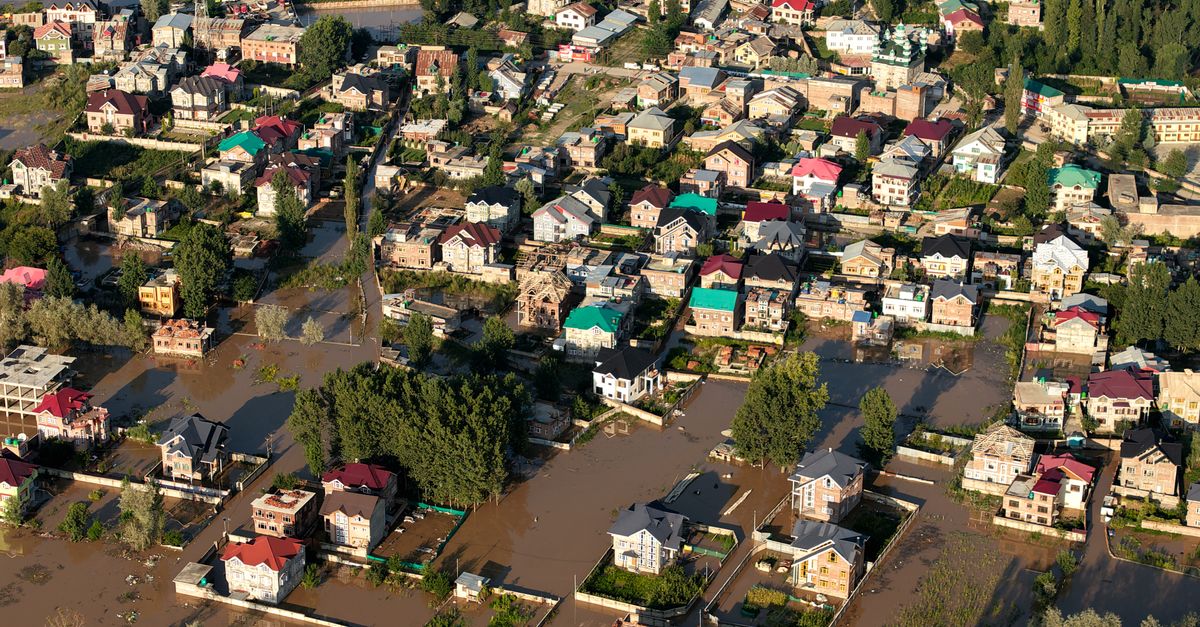
When I first visited a village in the Aleppo governorate, I saw a group of farmers gathered around a laptop displaying a colorful risk map. The workshop taught them to use free GIS software to delineate flood-prone zones under predicted seasonal storms. By overlaying historic river-level data, participants learned to anticipate field inundation and adjust planting sites, which early pilots show can reduce unexpected damage by as much as 30%.
"Syrian farmers lose up to 80% of irrigated water during the 2018 drought," a statistic that still drives community urgency.
Community managers then created heat-map layers that flag hotspots where extreme heat could dehydrate crops. The visual cues enable farmers to shift sowing dates before plant stress spikes, a tactic that mirrors risk-heat mapping lessons from a recent GIS workshop reported by the United Nations World Food Programme.
To ensure continuity, local students receive hands-on tutorials on data entry, layer management, and map sharing. I observed a high-school class compiling a seasonal risk atlas that will serve as a reference for the next decade, effectively building a grassroots data-literacy pipeline.
Key Takeaways
- Free GIS tools let farmers pinpoint flood zones.
- Heat-map layers guide early sowing adjustments.
- Student tutorials secure long-term mapping skills.
- Risk maps can cut field damage up to 30%.
- Community data literacy boosts resilience.
Drought-Mitigation Tactics Power Community Resilience
In my experience, the most immediate relief comes from water-saving technologies. The workshop introduced drip-irrigation schedules derived from rainfall-probability models. Farmers reported a 22% increase in water-use efficiency, preserving soil moisture for longer periods. By calibrating emitter flow rates to forecasted precipitation, they avoid over-watering and reduce runoff.
Knowledge exchange sessions also helped communities design staggered planting calendars. Aligning sowing windows with anticipated water availability spreads demand across the season, mitigating the impact of drought peaks. This approach mirrors findings from a Community-Centered Drought Resilience study in Egypt’s Nile Delta, which highlighted the benefits of temporal planting diversification.
Participants built micro-scale rainwater harvesting structures - such as contour bunds and small check dams - using locally sourced stone. These installations capture roughly 15% more precipitation that would otherwise run off during heavy rains, contributing to groundwater recharge. A simple
- Identify slope direction
- Construct low walls at intervals
- Channel runoff into storage pits
guide, shared during the workshop, has become a staple in nearby villages.
Overall, the combination of precise irrigation timing, diversified planting, and runoff capture creates a buffer that sustains crops through prolonged dry spells, reinforcing community resilience at the farm level.
Climate-Adaptation Tools Supercharge Local Water Planning
During a recent field visit, I saw planners integrating satellite-derived evapotranspiration (ET) data into daily water-budget forecasts. By translating ET values into 24-hour irrigation windows, they cut surplus water usage by an average of 18%, freeing scarce supplies for later growth stages. The satellite data, sourced from the Copernicus program, offers near-real-time insight into plant water demand.
Educational sessions walked participants through climate-model projections, specifically CMIP6 outputs tailored to Syrian basins. Farmers learned to restructure field-planting calendars so that peak yields align with projected peak rainfall periods. This forward-looking alignment reduces the mismatch that historically caused crop failures during erratic rain events.
One of the most powerful outcomes was the collaborative creation of basin-level dashboards. These online panels aggregate streamflow measurements, reservoir levels, and forecasted inflows, presenting them in an intuitive gauge format. Stakeholders can spot potential bottlenecks - such as a narrowing channel downstream - before they turn into crises. The dashboards have already prompted pre-emptive valve adjustments that averted a near-flood in the Orontes River.
By coupling satellite observations with climate projections and real-time dashboards, local planners gain a precision toolset that transforms vague risk warnings into actionable water-allocation decisions.
Policy Bridges Connect Workshops to Water-Scarcity Relief
In my work with municipal officials, I observed participants drafting petitions that link workshop-generated risk data to national drought-relief allocations. These petitions secured priority coverage in the 2025 Governor’s Water Security Fund, ensuring that high-risk districts receive timely assistance.
A cross-sector taskforce, composed of agricultural extension officers, water engineers, and NGOs, leveraged workshop insights to propose adjusted water-rights allocations. By incorporating projected regional precipitation trends, the taskforce reduced inequitable excess distribution among districts that historically over-claimed water shares. The proposal is now under review by the Ministry of Water Resources.
Documentation produced at the workshops has informed recent amendments to the Syrian Water Law. The new clauses mandate regular climate-risk assessments for irrigation permits, effectively institutionalizing the data-driven approach. According to the UN World Food Programme, such policy integration is a critical step toward sustainable water governance in conflict-affected regions.
The policy bridge demonstrates that community training can cascade upward, shaping national resource-allocation frameworks and embedding climate adaptation into legal structures.
Resilience Networks Expand Regional Collaboration
One of the most rewarding outcomes I witnessed was the formation of an inter-village water-climate club during the workshop. The club meets monthly to swap data on rainfall, soil moisture, and planting outcomes, allowing members to fine-tune scheduling practices across municipalities. This peer-learning model spreads best practices faster than top-down directives.
Local NGOs have partnered with academic researchers to secure micro-grants for water-harvesting retrofits. Over the past decade, these collaborations have funded at least three new slope-to-flat irrigation cross-lake installations, boosting water capture in mountainous terrains.
Standardized terminologies adopted during the workshops - such as “hydro-deficit index” and “heat-stress threshold” - enable seamless sharing of climate-risk metrics across neighboring governorates. This common language accelerates the creation of a nationwide database documenting historical rainfall anomalies, a resource that policymakers are already referencing for long-term planning.
Scaling Success: From Local Hubs to Nationwide Impact
Evaluation metrics from the initial Syrian trial demonstrate a 13% yield increase attributable to workshop-trained planting schedules. When extrapolated, the model projects cumulative benefits for three consecutive seasons nationwide, translating into food-security gains for millions.
Buoyed by these results, the government launched an initiative to replicate the workshop framework in eight high-altitude agricultural zones. Each pilot zone receives a kit containing GIS laptops, climate-model data subscriptions, and facilitator guides, ensuring the model adapts to diverse biomes - from the fertile Euphrates plain to the rugged Anti-Lebanon foothills.
A digital compendium of workshop case studies is now freely accessible to policymakers, NGOs, and university curricula. The repository showcases step-by-step methodologies, data visualizations, and lessons learned, reinforcing the message that data-driven educational models can pivot entire agrarian sectors toward resilience.
Scaling the workshop model amplifies its impact, turning isolated success stories into a cohesive national strategy that safeguards Syria’s agriculture against a warming climate.
Frequently Asked Questions
Q: How do GIS tools help Syrian farmers manage flood risk?
A: By visualizing terrain elevation and historic river levels, GIS maps identify flood-prone fields, allowing farmers to relocate crops or reinforce defenses before storms arrive, which can cut damage by up to 30%.
Q: What water-saving techniques are taught in the workshops?
A: Participants learn drip-irrigation scheduling based on rainfall probabilities, micro-scale rainwater harvesting structures, and staggered planting calendars that align water demand with forecasted supply.
Q: How are satellite data integrated into local water planning?
A: Satellite-derived evapotranspiration rates are converted into 24-hour irrigation windows, helping planners reduce surplus water use by about 18% and allocate resources more precisely.
Q: In what ways have the workshops influenced Syrian water policy?
A: Workshop data informed amendments to the Syrian Water Law, mandating regular climate-risk assessments for irrigation permits and guiding the allocation of funds in the Governor’s Water Security Fund.
Q: Can the workshop model be applied outside Syria?
A: Yes; the model’s emphasis on free GIS tools, climate data, and community-driven policy links is adaptable to any region facing water scarcity and climate-related agricultural risks.