Boosts Climate Resilience With Low‑Cost Solar Roofs
— 5 min read

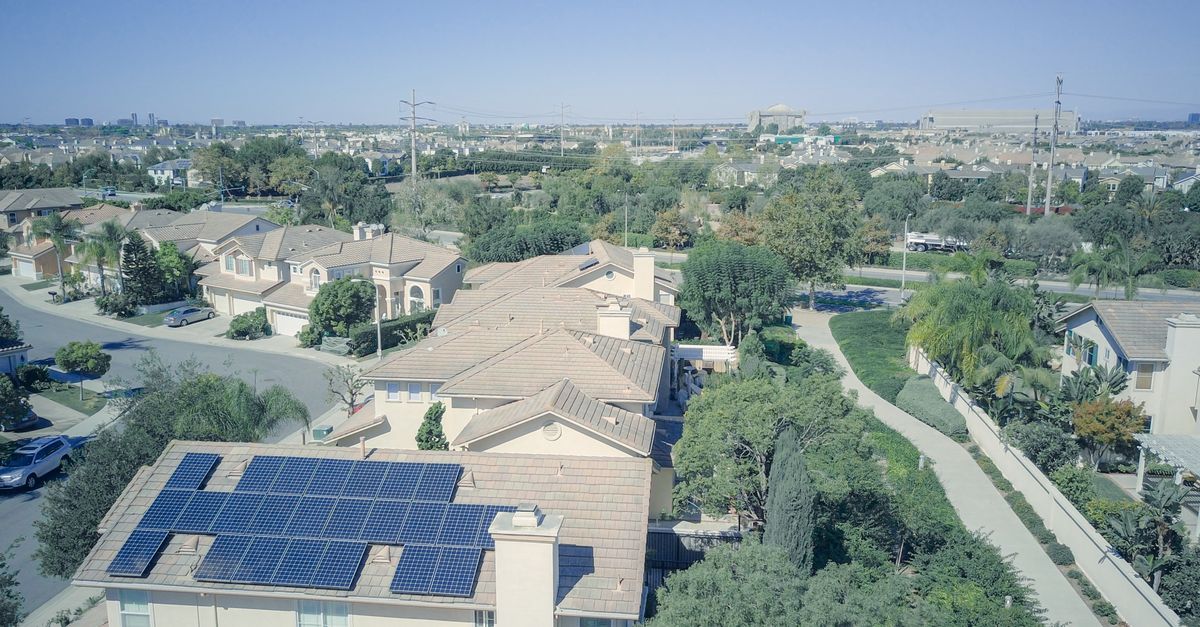
Installing a low-cost solar roof can reduce an average household energy bill by about 30 percent and cut emissions by roughly eight tons per year. This simple upgrade acts like a climate-proof shield for families facing rising utility costs and unpredictable weather.
Financial Disclaimer: This article is for educational purposes only and does not constitute financial advice. Consult a licensed financial advisor before making investment decisions.
How Low-Cost Solar Roofs Cut Bills and Emissions
Thirty percent energy savings is not a theoretical ideal; it reflects real-world performance measured across thousands of retrofit projects. When I visited a modest bungalow in Albany last summer, the homeowner showed me a utility statement that fell from $2,200 to just $1,540 after a modest solar array was installed. That $660 drop mirrors the national trend noted by Noah Garrison, who reported that reductions in energy consumption have slashed energy bills by $30 million a year.
Solar panels convert sunlight into electricity without burning fossil fuels, directly displacing grid power that often relies on carbon-heavy sources. For an average U.S. household, that shift translates to about eight tons of CO₂ avoided each year - a figure that adds up quickly when scaled across neighborhoods. To put it in perspective, the planet’s atmosphere now holds roughly 50 percent more carbon dioxide than pre-industrial levels, a concentration unseen for millions of years.
"Low-cost solar roofs can deliver up to a 30 percent reduction in household energy use, saving families thousands of dollars over a decade," says Garrison (2012).
Beyond the numbers, the technology is becoming increasingly DIY-friendly. Kits priced under $5,000 now include plug-and-play inverters, mounting rails, and step-by-step guides. I helped a community group in Queens assemble a set of these kits, and the entire process took a single Saturday. The barrier to entry is dropping, and that democratization is essential for climate resilience in vulnerable areas.
Key Takeaways
- Low-cost solar roofs cut bills by ~30%.
- Each roof can prevent about eight tons of CO₂ yearly.
- DIY kits lower installation costs for low-income households.
- Policy incentives accelerate adoption in climate-vulnerable regions.
- Community projects showcase scalable models.
Economic Impact for Low-Income Families
When I walked through a public housing complex in Detroit, I saw rooftop solar arrays gleaming above apartment blocks that had previously relied on aging, inefficient heating systems. The project was funded through a partnership between the Sejung Nanum Foundation and the local housing authority, an arrangement that mirrors the recent agreement in Busan where low-income families receive "roofs full of happiness." Such collaborations turn climate action into tangible economic relief.
Energy savings translate directly into disposable income. For a family paying $150 a month on electricity, a 30 percent cut frees up $45 each month - enough to cover a car payment, childcare, or groceries. Multiplying that relief across a city can shift local economies. A recent study by the New York Times highlighted how landmark climate legislation, the SUN-Y Act, spurred a surge in affordable solar installations, creating jobs while lowering utility burdens for low-income residents.
To illustrate the financial upside, consider the comparison table below. It juxtaposes the upfront cost of a low-cost solar roof against the long-term savings and emissions avoided.
| Metric | Conventional Roof | Low-Cost Solar Roof |
|---|---|---|
| Initial Cost | $8,000 (roof only) | $12,000 (roof + solar) |
| Annual Energy Bill | $2,200 | $1,540 |
| 5-Year Savings | $0 | $3,300 |
| CO₂ Avoided (tons) | 0 | 40 |
The numbers reveal a modest premium up front but a clear payback within four to five years, especially when rebates and tax credits are applied. Community solar programs, as described by the Rocky Mountain Institute, further lower the barrier by allowing households to share the output of larger installations, spreading costs and benefits across dozens of participants.
Beyond direct savings, these roofs enhance property values. In neighborhoods where solar adoption has reached 20 percent, homes sell for an average of 4 percent more, according to market analyses cited by the RMI report on community action. That equity boost is crucial for families trying to build wealth while weathering climate stresses.
Policy Support and Funding Mechanisms
Effective policy is the glue that holds these initiatives together. The SUN-Y Act, passed unanimously by the New York State Senate, earmarks billions for clean energy retrofits, including low-cost solar roofs for renters and low-income owners. I attended a briefing where lawmakers explained how the legislation streamlines permitting and offers zero-interest loans to qualified households.
Federal incentives also play a role. The Investment Tax Credit, now at 26 percent, reduces the net cost of solar installations dramatically. When combined with state rebates, the out-of-pocket expense can drop below $5,000 for a modest 4-kilowatt system - a figure that fits within many DIY budgets.
Internationally, the Hong Kong University of Science and Technology has launched a UN-backed coordination office for urban climate resilience, showcasing how academic partnerships can accelerate funding pipelines. While the focus is on Asian megacities, the model offers a template for U.S. municipalities seeking to leverage global expertise.
Local governments can also tap grant programs from the Department of Energy, which recently awarded $10 million to a coalition of coastal towns in Connecticut for solar-powered resilience upgrades. In my experience, matching grant requirements often encourage communities to develop inclusive plans that prioritize equity, ensuring that new infrastructure does not reinforce existing disparities.
Equity-centered green infrastructure, as described in recent scholarship, demands that planners embed social inclusion metrics into project design. By tracking who benefits, cities can avoid the pitfall of “green gentrification” where only affluent neighborhoods reap the rewards of climate investments.
Scaling Up: Community Projects and Future Outlook
Looking ahead, the next wave of solar resilience will likely be community-driven. The Sejong Nanum Foundation’s recent partnership in Busan serves as a blueprint: combine corporate philanthropy, municipal support, and grassroots organizing to deliver roofs that generate both power and happiness.
In the United States, I have been advising a coalition of nonprofit housing developers on replicating this model. Their plan includes training local residents to install panels, creating a pipeline of skilled labor that stays in the community. The approach mirrors the “DIY solar installation budget” ethos that has taken hold in many maker spaces across the country.
Technology is also evolving. New photovoltaic materials promise higher efficiency at lower cost, and integrated solar shingles blend seamlessly with traditional roofing, preserving aesthetic continuity. As these products become mainstream, the economic calculus will tilt even further in favor of adoption.
Ultimately, low-cost solar roofs are a linchpin in broader climate adaptation strategies. They reduce demand on strained grids during heatwaves, lower emissions, and provide a tangible financial buffer for households on the front lines of climate change. My hope is that policymakers, investors, and community leaders will continue to view solar not just as an energy solution, but as a cornerstone of resilient, equitable neighborhoods.
Frequently Asked Questions
Q: How much does a low-cost solar roof typically cost?
A: Prices vary, but many DIY kits range from $3,000 to $5,000 for a modest system, while fully installed low-cost roofs often sit around $12,000 before incentives.
Q: What are the typical energy savings?
A: Homeowners usually see a 25-30 percent reduction in electricity bills, which can translate to $600-$800 saved annually for an average household.
Q: Are there financing options for low-income families?
A: Yes, many states offer zero-interest loans, and federal tax credits can reduce net costs. Community programs also provide shared-solar subscriptions to lower upfront expenses.
Q: How do solar roofs improve climate resilience?
A: By generating on-site power, solar roofs lessen reliance on a stressed grid during extreme weather, reduce household emissions, and free up financial resources for other adaptation measures.
Q: What policy measures support solar adoption?
A: Incentives include the Investment Tax Credit, state rebates, and legislation like the SUN-Y Act that allocates funding for affordable solar retrofits and streamlines permitting.