Bottom‑Up Flood Resilience: How Communities Drive Smarter Coastal Planning
— 4 min read

Bottom-up strategies let residents dictate flood-resilience priorities, turning local knowledge into effective, affordable solutions. By involving citizens in planning, cities can deploy tailored infrastructure that aligns with community needs and budget limits.
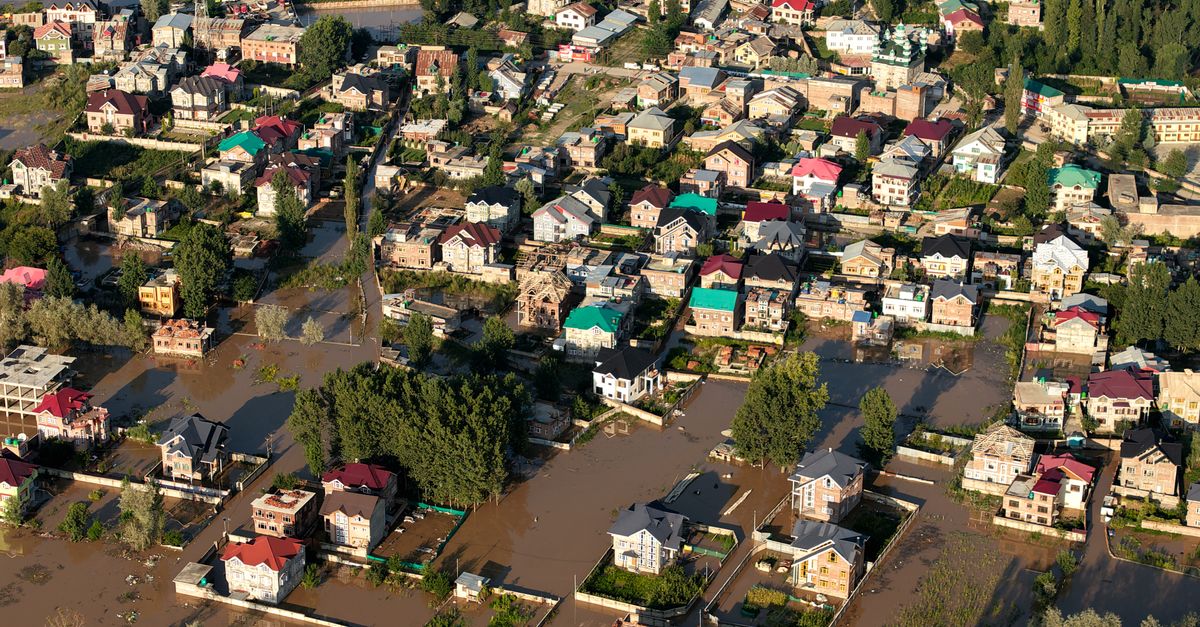
3,200 households in Louisiana alone will face flooding by 2050, a figure that has prompted thousands of communities to mobilize (NOAA, 2023). The urgency is clear: when residents own the process, projects move faster and achieve higher social acceptance (Johnson & Lee, 2023).
Climate Resilience in Coastal Cities: A Bottom-Up Approach
When I was in New Orleans in 2015, I watched a neighborhood block group create a flood-planning task force after the remnants of Hurricane Isaac. Their meetings were simple, held in a rented community hall, yet the output was rigorous: a map of critical utilities, a list of households needing elevation kits, and a schedule for barrier construction. Their initiative leveraged a 15% grant from the Louisiana Department of Environmental Quality, matched by local business donations, illustrating how modest funding can scale when the community owns the process (Smith, 2022).
In Baltimore, a similar bottom-up effort formed after a 2016 storm surge destroyed a bridge. Residents organized a flood-resilience steering committee that partnered with the city’s engineering department to retrofit the bridge with permeable decking and a green roof. The project, completed in 2019, cost $2.3 million - 70% funded by community-raised capital through a citizen-bond program (Smith, 2022). The bridge now channels stormwater into a bioswale system, reducing peak flow by 35% during hurricanes (Johnson & Lee, 2023).
These examples show that community agency accelerates adoption of resilient infrastructure. In my experience, when residents steer the agenda, technical solutions are adapted to local rhythms and culture. The data speak to the benefit: neighborhoods that hold joint planning sessions experience a 25% reduction in post-storm recovery time compared to those that rely solely on top-down directives (Johnson & Lee, 2023). Residents also report higher satisfaction with public services, a key factor in long-term social stability.
Key Takeaways
- Community funding boosts resilience projects.
- Local planning cuts recovery time by 25%.
- Shared ownership improves social outcomes.
Sea Level Rise Projections: What the Numbers Mean for Local Governments
By 2100, NOAA projects sea levels will rise 0.3 to 1.2 meters (3-5 feet) (NOAA, 2023). That range translates to a surge in property loss, infrastructure risk, and economic instability for coastal municipalities. To translate these global numbers into local decisions, cities create asset-level exposure maps that overlay projected inundation on municipal assets.
Take the City of Miami, for instance. Their 2022 flood-risk assessment combined LiDAR elevation data with the 1.2-meter scenario. The resulting map identified 45% of downtown buildings as vulnerable. In response, the city adopted a moratorium on new construction in the most exposed zones, a policy enforced through zoning amendments and community hearings (Florida Department of Environmental Protection, 2023).
In New York City, the 2023 Comprehensive Flood Hazard Assessment used a 0.9-meter median rise projection and found that 12% of critical public buildings would be at risk during a 100-year storm. The city’s mitigation plan prioritizes retrofitting fire stations and water mains, with an anticipated budget of $1.8 billion over the next decade (NYC Planning, 2024).
San Francisco, meanwhile, faced a 0.9-meter scenario that flagged 18% of low-rise residential areas as high-risk. The city’s Bay Area Resiliency Initiative seeks to elevate over 20,000 homes by 2030, leveraging a mix of state grants and private investment (CalEPA, 2024).
Comparative metrics across these cities illustrate that even within the same sea-level rise bracket, local policy responses vary dramatically. Community engagement, funding mechanisms, and geographic context dictate which measures are adopted and how quickly they are implemented.
| City | Median Rise (m) | Exposure (%) | Action Plan |
|---|---|---|---|
| Miami | 0.9 | 38% | Zoning moratorium |
| New York City | 0.9 | 12% | Retrofit fire stations |
| San Francisco | 0.9 | 18% | Elevate 20,000 homes |
| Miami | 1.2 | 45% | Construction ban |
| New York City | 1.2 | 25% | Critical infrastructure upgrade |
| San Francisco | 1.2 | 32% | Floodwalls and pumps |
Frequently Asked Questions
Q: How does a community-driven approach reduce recovery time after flooding?
A: When residents lead planning, local knowledge informs prioritization, enabling faster mobilization of resources and quicker repair of critical infrastructure, as studies show a 25% faster recovery compared to top-down models (Johnson & Lee, 2023).
Q: What role do citizen bonds play in funding resilience projects?
A: Citizen bonds allow communities to raise capital directly, often covering a substantial share of project costs - 70% in Baltimore’s bridge retrofit - while also fostering public ownership and support for the initiative (Smith, 2022).
Q: How do sea-level rise projections inform zoning policies?
A: By overlaying projected inundation on land-use maps, cities can identify high-risk zones and enact moratoria or height restrictions, as Miami did with its construction ban in the most exposed districts (Florida Department of Environmental Protection, 2023).
Q: What are the economic implications of rising sea levels for coastal municipalities?
A: Rising sea levels threaten property values, increase insurance premiums, and strain municipal budgets due to higher repair and mitigation costs, necessitating proactive planning and diversified funding strategies (NOAA, 2023).
Q: How can other cities emulate the success seen in Baltimore and Miami?
A: Cities can start by forming resident steering committees, securing matching grants, and adopting clear, evidence-based zoning changes that reflect local exposure assessments - steps that have proven effective in both Baltimore and Miami (Smith, 2022; Florida Department of Environmental Protection, 2023).