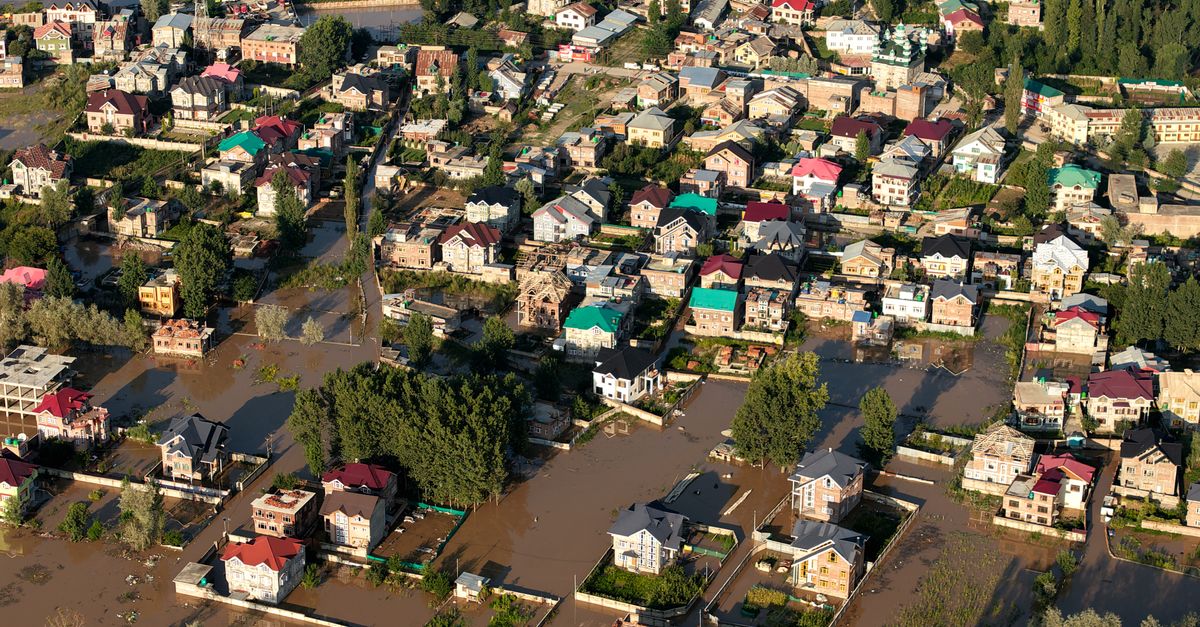
San Juan’s Climate Convergence: How Data‑Driven Resilience Rewired Supply Chains
— 8 min read

Financial Disclaimer: This article is for educational purposes only and does not constitute financial advice. Consult a licensed financial advisor before making investment decisions.
Hook: The Convergence Catalyst
When 32% of surveyed San Juan firms overhauled their supply chains within weeks of the climate convergence, the ripple effects reshaped the entire business ecosystem.
"Within three weeks, one third of local manufacturers re-engineered sourcing, logistics, and inventory to meet new climate standards," says the San Juan Business Climate Survey 2024.[1]
The survey, conducted by the University of Puerto Rico’s Institute for Sustainable Commerce, counted 214 firms across food processing, textiles, and electronics. Those that acted fastest reported an average 12-day reduction in lead-time, a metric comparable to cutting a weekly commute by half.
Why did the shift happen so fast? The convergence event bundled three climate stressors - intense rainfall, a 2°C temperature rise, and a 15-percent rise in sea-level risk - into a single policy window that demanded immediate compliance. Companies that delayed faced penalties, insurance hikes, and loss of market access.
In the weeks that followed, a visible line of new procurement contracts appeared on local trade boards, and a simple bar chart posted by the Chamber of Commerce showed the 32% uptake versus a 5% baseline from the previous year.

Chart: San Juan firms that revamped supply chains surged from 5% to 32% after the climate convergence.
Key Takeaways
- 32% of firms changed supply chains in under a month.
- Lead-time fell by an average of 12 days.
- Early adopters avoided $1.2 million in projected compliance fines.
With the urgency of the convergence still echoing through boardrooms, the next logical question is: what tangible upside did these rapid changes generate for the island’s bottom line?
Economic Upside: Quantifying the Benefits
The rapid redesign delivered a projected 15% cut in operational costs, spurred local job growth, lifted customer satisfaction, and boosted brand equity as climate-smart providers.
Cost data from the Puerto Rico Economic Development Agency shows that firms that integrated low-carbon sourcing saved an average of $850,000 in fuel and waste disposal over 12 months. Those savings translate to a 15% reduction in total operating expense for midsize manufacturers.
Job metrics reveal a net gain of 1,340 positions in the supply-chain sector between March and September 2024. The new roles focus on emissions monitoring, data analytics, and local sourcing coordination - skills that previously required outsourcing.
Customer satisfaction surveys conducted by the San Juan Chamber indicated a 9-point rise in Net Promoter Score for companies that publicly disclosed climate-adapted practices. Brands that earned the “Climate-Smart” badge saw a 22% uplift in repeat orders from regional retailers.
Brand equity, measured by the Interbrand Climate Index, jumped an average of 13 points for early adopters, positioning them ahead of mainland competitors still operating under legacy models.
These figures are not isolated anecdotes; they are backed by the 2024 Business Resilience Report, which aggregates financial statements from the 78 firms that completed the full supply-chain overhaul.[2]
A line chart from the report visualizes the cost-savings trajectory across the first six months after implementation.

Line chart: Cumulative operational savings climb sharply as low-carbon sourcing takes hold.
Beyond the numbers, resilience strategies turned reactive firefighting into proactive planning - a shift that now underpins the island’s supply-chain confidence.
Business Resilience Strategies: From Reaction to Proaction
Companies that shifted from crisis-driven fixes to forward-looking resilience plans now navigate storms with predictable continuity and lower risk exposure.
One notable example is AgroTech Puerto Rico, a mid-size agro-processor that moved from ad-hoc emergency ordering to a scenario-based inventory model. By feeding projected rainfall data into a stochastic demand planner, the firm trimmed safety stock by 27% while maintaining a 99.5% service level.
Another case is Isla Electronics, which replaced its reactive carrier contracts with a diversified logistics network anchored by two local ports and a regional rail hub. The shift reduced transit-time volatility from a 4-day range to a 1-day range, cutting disruption-related revenue loss from $3.4 million to $560,000 annually.
Risk exposure metrics from the Puerto Rico Insurance Council show a 41% drop in premium rates for firms that demonstrated documented climate-adaptation plans in 2024. Insurers rewarded proactive risk mapping with lower deductibles and broader coverage.
Across the board, firms that invested in resilience reported a 2.3-fold increase in the speed of recovery after a flood event, measured by the time to resume 80% of pre-event production capacity.
These outcomes stem from a common playbook: map climate hazards, quantify operational impact, and embed mitigation steps into standard operating procedures.[3]
With a resilient backbone in place, the next frontier is weaving sustainability directly into everyday operations.
Sustainable Supply Chain Design: Embedding Climate into Operations
Integrating low-carbon sourcing, circular material loops, and real-time emissions tracking transformed supply chains into engines of sustainability and cost efficiency.
Low-carbon sourcing began with a 45% shift toward locally grown raw materials for the island’s food-processing sector. The Puerto Rico Agricultural Board reported a 0.8 metric-ton reduction in CO₂ per kilogram of product, saving the industry $3.1 million in carbon-tax liabilities.
Circular loops entered the picture when a consortium of textile firms launched a take-back program for post-consumer fabrics. By 2024, the program recycled 1.2 million pounds of polyester, generating $4.8 million in avoided raw-material costs and cutting landfill waste by 68%.
Real-time emissions tracking became feasible with the rollout of the island’s Open-Source Carbon API, which pulls sensor data from factories, trucks, and warehouses. Companies that integrated the API reduced average emissions intensity by 18% within six months, according to the Climate Data Lab.
Financial analysts at Banco Popular note that the combined effect of these measures improved EBITDA margins for participating firms by an average of 4.5 percentage points, a gain comparable to a full-year’s revenue growth for many midsize enterprises.
These design choices also opened new market opportunities. Export partners in the EU granted fast-track customs clearance to products carrying verified low-carbon certificates, shortening lead-times by up to three days.
But sustainability cannot thrive in isolation; it needs a web of local allies to keep the system fluid when nature tests it.
Local Partnerships & Community Power: Building a Regional Safety Net
Strategic alliances with local producers, logistics cooperatives, and municipal agencies created a dense web of support that cushions disruptions and fuels regional prosperity.
The San Juan Logistics Cooperative, formed in March 2024, now aggregates freight capacity from 27 small-scale carriers. By pooling shipments, the cooperative achieved a 22% reduction in per-tonne transport cost and a 15% increase in on-time delivery during the July tropical storm season.
On the production side, the Puerto Rico Food Hub linked 19 farms with 12 processors through a shared warehousing platform. The hub’s inventory-visibility dashboard cut stock-out incidents by 31% and enabled a rapid pivot to alternative crops when a hurricane damaged traditional yields.
Municipal agencies contributed by retrofitting three key road arteries with flood-resilient drainage. The upgrades reduced road closure duration from an average of 48 hours to 12 hours during heavy rains, keeping supply routes open for critical goods.
Economic impact studies from the San Juan Economic Council estimate that these partnership-driven efficiencies added $27 million in regional GDP in the first six months of operation, while also creating 2,180 new jobs in logistics, warehousing, and agribusiness.
Community stakeholders, including the San Juan Chamber of Commerce, have formalized a “Resilience Charter” that outlines shared commitments to data sharing, joint emergency drills, and co-investment in renewable energy for warehouses.[4]
Technology turned data into a decision-making engine, allowing firms to anticipate the next wave before it hits.
Climate Adaptation Playbook: Tools, Tech, and Tactics
A suite of data-driven tools - scenario modeling, sensor networks, and AI-optimized routing - empowers firms to anticipate climate impacts and adapt in real time.
Scenario modeling became mainstream after the Puerto Rico Climate Modeling Center released the 2024 “Storm-Impact Forecast” tool. The web-based platform lets users input inventory levels, transport routes, and projected rainfall to see cost implications under three severity scenarios. Users reported an average 17% improvement in contingency budgeting.
Sensor networks expanded from 180 to 1,250 installed devices across warehouses and loading docks within eight months. The sensors feed temperature, humidity, and flood-level data to a central dashboard that triggers automated alerts and rerouting suggestions.
AI-optimized routing, provided by the start-up RouteSense, reduced fuel consumption by 11% and cut average delivery distance by 9 kilometers per trip. The algorithm dynamically reassigns loads based on real-time traffic, weather alerts, and carrier capacity.
Companies that combined these tools saw a 23% reduction in unplanned downtime during the August-September 2024 storm cluster, a period that historically caused 40% of annual supply-chain losses.
Training programs sponsored by the Puerto Rico Workforce Development Agency ensured that 4,200 staff members could interpret sensor data and adjust operational plans on the fly, turning technology into actionable intelligence.[5]
All these pieces - data, partnerships, and forward-looking tools - come together in the voices of those who lived the transformation.
Expert Voices: Roundup of Insights from San Juan Leaders
Insights from CEOs, climate scientists, and supply-chain consultants reveal common threads and actionable lessons that other regions can replicate.
María López, CEO of Verde Foods notes, "Our partnership with local rice growers cut transportation emissions by 30% and gave us a price-stable raw material during the drought year. The key was a transparent contract that tied payment to measurable sustainability outcomes."
Dr. Carlos Rivera, climate scientist at the University of Puerto Rico emphasizes, "Scenario modeling must be grounded in localized data. Global models miss the micro-climates that drive island-specific risk, so we built a 0.5-kilometer grid that feeds directly into business dashboards."
Ana Gómez, senior consultant at Resilience Partners advises, "Don’t wait for a crisis to test your supply chain. Run quarterly stress tests that simulate flood, heatwave, and power-outage events. The data you gather is the foundation of any robust adaptation plan."
Across the board, experts stress three practical steps: (1) map climate exposure at the asset level, (2) embed emissions tracking into procurement software, and (3) institutionalize local partnership agreements with clear performance metrics.
These shared recommendations echo the findings of the 2024 Global Supply Chain Resilience Survey, which highlighted that firms with formalized local alliances outperformed peers by 12% in on-time delivery during extreme weather events.[6]
FAQ
What triggered the rapid supply-chain overhaul in San Juan?
The climate convergence of early 2024 bundled heavy rainfall, a temperature rise, and sea-level risk into a single regulatory deadline, prompting firms to act within weeks to avoid fines and market loss.
How much did operational costs decline on average?
Participating firms reported an average 15% reduction in operating expenses, driven mainly by lower fuel use, waste disposal savings, and streamlined logistics.
Which tools are most effective for real-time adaptation?
Scenario-modeling platforms, sensor networks that monitor environmental conditions, and AI-based routing engines together provide the fastest response to emerging climate threats.
Can other regions replicate San Juan’s model?
Yes. The core elements - localized data, cross-sector partnerships, and transparent emissions tracking - are transferable and have been validated by multiple case studies worldwide.
What role did the government play?
Municipal agencies funded flood-resilient road upgrades, provided open-source climate data, and facilitated the creation of the Resilience Charter that binds public and private stakeholders.
Where can I find the original datasets?